EXISTING SOLAR
Put your solar energy to work after dark.
For qualifying homeowner-owned systems, add storage for evenings, peak hours, and the moments when the grid goes down.

ENERGY INDEPENDENCE / ON YOUR TERMS
Store power for the hours that matter. Keep selected essentials running through outages, use more of your own solar, and take greater control of when you buy electricity. This is energy independence built around your home.
BATTERY-ONLY AVAILABILITY Texas + PG&E, SDG&E, and SCE territories in California
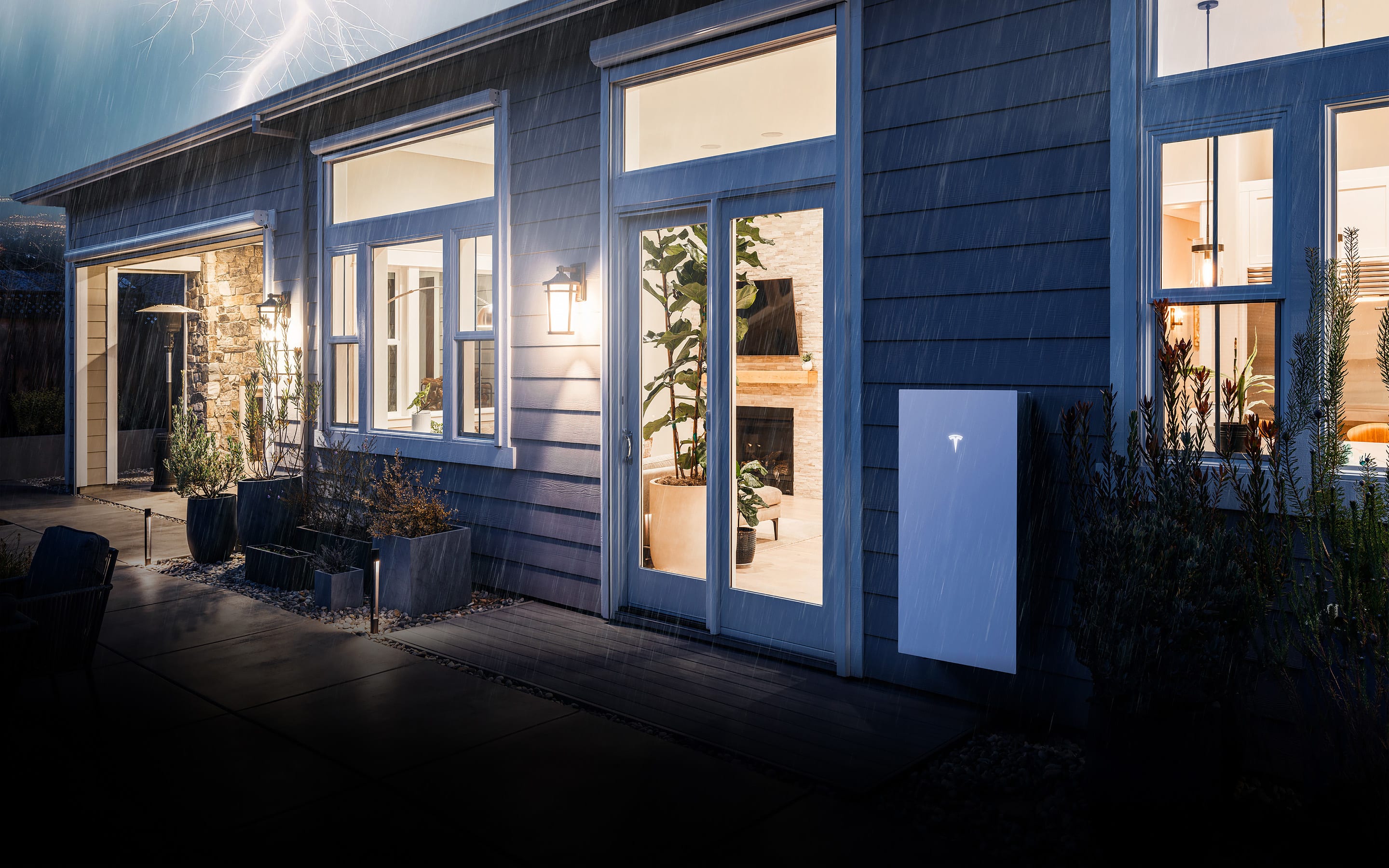
A well-designed home energy system can store available solar, shift some electricity use to a different time, and keep selected loads powered when utility service is interrupted.
“The question is no longer IF your power goes out. It's whether you'll be ready when it does.”
Nominal energy capacity for one current Powerwall 3.
EXAMPLE OUTPUT11.5 kWMaximum continuous real power for one unit, subject to configuration.
ROUND-TRIP EFFICIENCY89%Published example efficiency used in our rate-shifting illustration.
EXAMPLE WARRANTY10 yearsPublished manufacturer warranty term for Powerwall 3. Final terms depend on the selected equipment.
Solar can charge your battery during the day. On a compatible time-of-use plan, the battery can also charge from the grid during lower-cost hours, often overnight, then power your home when electricity is more expensive or the grid is unavailable.
Rooftop solar can supply the home and send available excess energy into the battery.
Choose the solution that fits your goals today. We will help shape it into a practical home energy plan.
For qualifying homeowner-owned systems, add storage for evenings, peak hours, and the moments when the grid goes down.
Standalone battery projects are live in Texas and in California homes served by PG&E, SDG&E, or SCE. Additional states are in development.
Pair solar generation with battery storage for a more resilient, self-reliant home energy system.
LIMITED-TIME STORAGE OFFER
Powur currently advertises a qualification-based, day-one discount of up to 35% on eligible home storage systems. The actual amount depends on the home, utility, location, project structure, and program rules.
Check my current optionsThis is Powur's advertised storage discount. It is not an automatic government tax credit, and it should be confirmed before a quote is presented.
View Powur's current offerTexas exempts the appraised value added by qualifying solar or wind energy devices. The homeowner applies through the local appraisal district. This is not a universal battery-only rebate.
Texas Comptroller detailsOncor says qualifying new solar-plus-battery projects may receive an incentive through an approved participating service provider. The home must be in Oncor territory; system design, available funding, and program approval all apply.
Check the Oncor programPG&E says the general-market SGIP rebate may cover roughly 15% of battery cost. Certain income and resilience categories can be substantially higher, but funding, utility territory, waitlists, and eligibility rules apply.
Review PG&E SGIPThe homeowner Residential Clean Energy Credit is unavailable for expenditures made after December 31, 2025. The 35% figure above refers to Powur's current advertised offer, not a federal homeowner credit.
IRS guidanceBattery storage can protect your home and shift when you buy electricity. Charge during lower-cost hours, then use stored energy when utility rates climb.
Compare battery rate shifting or solar energy offset. Your real result depends on your rate plan, equipment settings, usage, utility rules, financing, and installation cost.
The battery charges when your electricity plan is cheaper, then powers the home when the plan is more expensive. If your plan has one flat rate, this type of savings may be little or none.
Texas homes averaged 1,096 kWh a month and 14.94¢/kWh in 2024. The current 25¢ peak setting is an example of a higher-cost period, not the statewide average. Shifting 10 kWh is about 28% of an average Texas day.
Illustration uses 89% round-trip efficiency and assumes the full amount can be shifted every day. It excludes demand charges, fixed charges, taxes, program limits, battery degradation, financing, and system cost. Your plan may not have lower-cost hours. EIA usage and rate source · Efficiency source
Get my real numbersA generator waits for the grid to fail. A home battery can work every day by storing solar, supporting the home during higher-priced hours on compatible utility plans, and standing ready when an outage begins.
No dragging equipment outside or starting an engine when the power drops.
No combustion engine announcing to neighbors or passersby that your home still has power.
Store daytime solar or charge during lower-cost hours, then use that energy when grid rates rise where your plan supports it.
No gasoline cans, exhaust, engine maintenance, or repeated refilling during a long outage.
A generator can still be a useful, lower-upfront emergency tool. The battery advantage is that it can deliver value before, during, and after an outage.
When your utility plan offers lower overnight rates.
Capture energy your panels produce for later use.
Reduce grid purchases during higher-priced hours.
Automatic backup for the loads selected in your plan.
Your actual opportunity depends on your utility, rate plan, household usage, solar production, and system design.
We use your address, utility plan, and recent electric bill to build a personalized savings and backup proposal.
Time-based battery controls can charge when power is less expensive and use stored energy during higher-cost periods. Savings and backup performance vary by home and utility plan.
A useful backup plan begins with priorities, not product names. Tell us which parts of everyday life matter most during an outage.
Build around my prioritiesThe right plan starts with how you live, what must stay powered, and how much energy independence you want.
Choose the parts of home life that matter most when utility power is unavailable.
Match battery capacity and selected loads to the level of backup you want.
Review the proposed system, expected operation, installation scope, and project cost.
Answer a few practical questions so Diego can check the market, utility, home, and project before the first call.

Choose the closest description of your home.
Blackout Ready USA is led by Diego Jimenez, a U.S. Army veteran who believes preparation should be practical, direct, and built around what matters most. We give homeowners a clear path to home battery storage and solar, from the first conversation through a complete project plan.
Good system design starts with clear expectations about capacity, runtime, installation, and availability. A battery is a practical preparation and energy-control choice, not a bet on a scary headline.
We link the material behind our battery claims so you can understand the options, ask better questions, and decide at your own pace.