
Outage planning / Blog & insights
Blackout supplies that earn their place
A practical way to choose lighting, charging and information tools without buying a pile of gadgets.
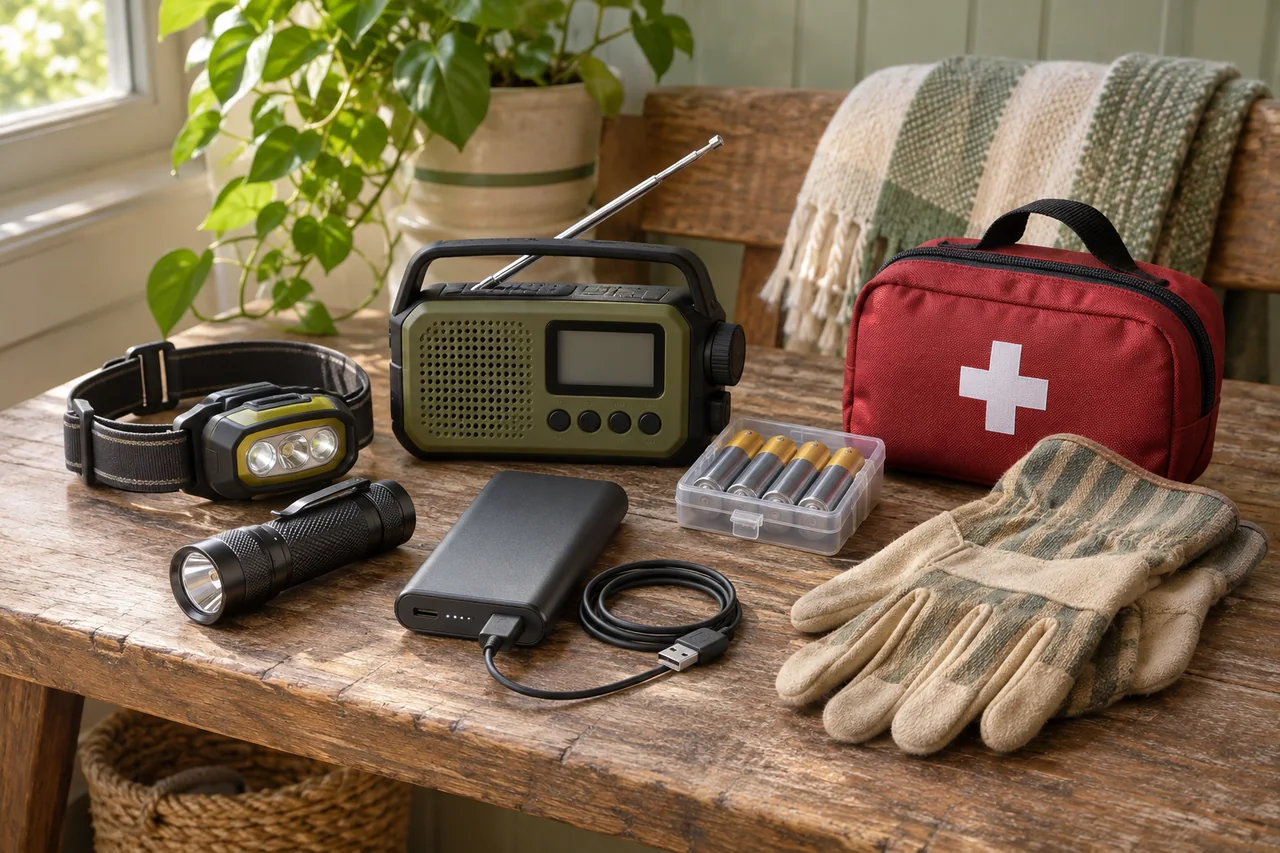
Start with what you already own
Walk through a first-night scenario: the lights are out, a phone is low and you need to find your household plan. Gather the items that would help and test them. CDC's power-source checklist includes flashlights or headlamps, battery lanterns, spare batteries, charging equipment, a weather radio and battery-backed alarms. Use that as a gap check before buying duplicates. [1]
Give lighting a specific job
A headlamp leaves your hands available for finding supplies. A lantern can light a shared room, while a small flashlight can stay beside a bed. Try the controls in the dark and check whether everyone can operate them comfortably. Choose battery types you can keep track of and store the right spares with the lights. Record where each light belongs instead of putting every working light in one distant cupboard.
Test the charger with the actual device
Check the cable, connector and charging requirements together. Charge a power bank, connect the phone or other compatible device, and see how it performs in normal use. Label the matching cable and keep it with the bank. Read manufacturer limits before connecting any other equipment. Small-device charging and household appliance backup are different planning jobs; list larger needs in the backup priorities worksheet.
Keep an information source that does not depend on one phone
CDC includes a battery-powered or hand-crank NOAA weather radio among useful emergency power supplies. Test local reception and learn the controls before the weather turns. Keep the instructions and needed batteries nearby. Also print your utility reporting details, local alert source and key contacts. Ask each household member to find them without opening your phone. [1]
Buy the next missing function, then practice
If your supplies already cover light and charging, the next useful purchase may be a manual can opener, appliance thermometer or suitable water container. Use the printable checklist to choose a few gaps within your budget. Set a review reminder to recharge, replace used items and check changing household needs. Write down what you learned from the practice run; familiar equipment is easier to find and use when the lights go out.
Sources & further reading
Information reviewed November 10, 2026. Follow the linked primary sources for complete guidance and updates.
- Power sources and emergency suppliesCDC Prepare Your Health
- Basic emergency supply kitReady.gov / FEMA
Examples describe useful functions, not product endorsements. Follow equipment instructions and arrange separate backup plans with the care team for essential medical equipment.