
Safety & readiness / Blog & insights
Stocking ammunition responsibly: storage and readiness gear
A practical guide to secure storage, a useful inventory and gear that supports responsible sporting use and household preparedness.
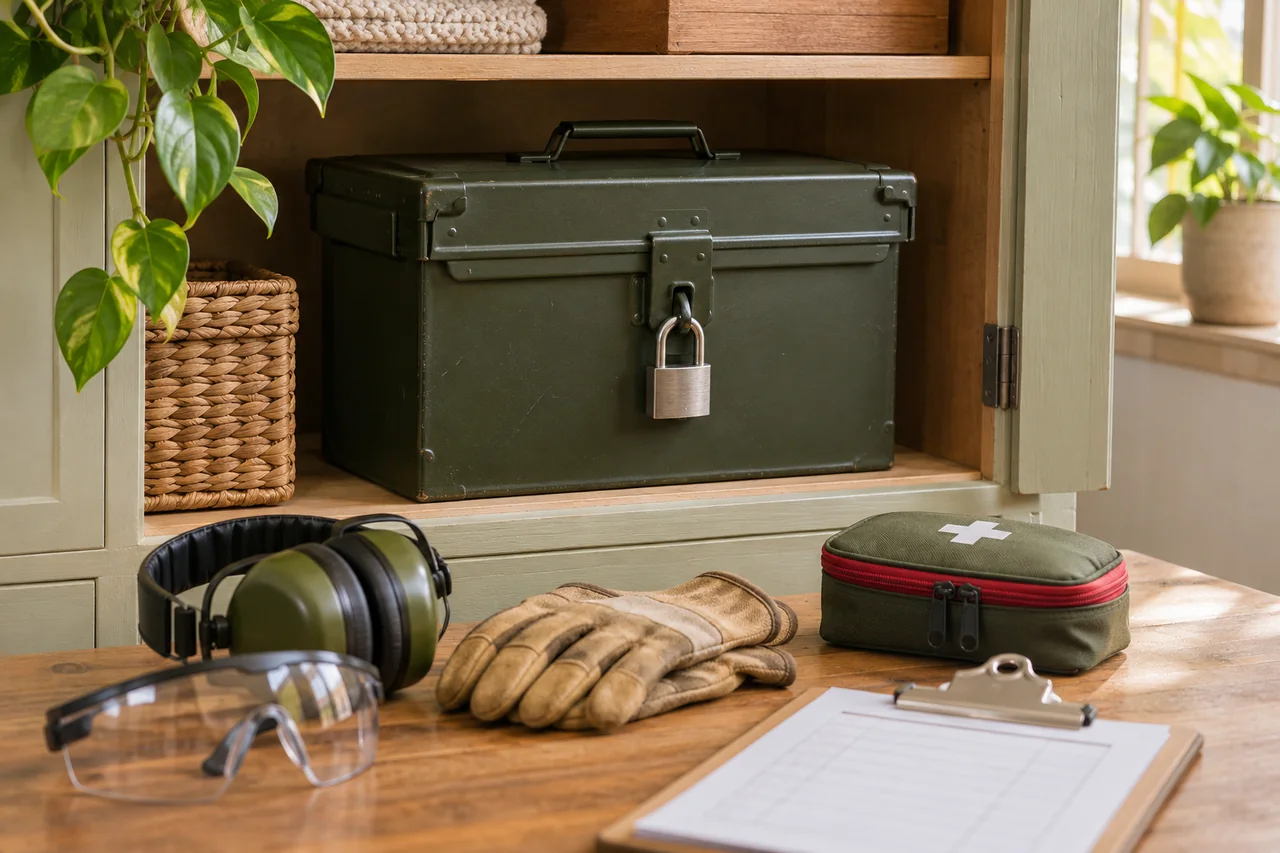
Plan secure storage before adding supplies
Start by reviewing what you already own, where it is kept and who can reach it. Project ChildSafe recommends keeping ammunition locked separately from firearms, with firearms unloaded and secured when not in use. Choose storage appropriate to your household and follow its installation instructions. Keep keys and combinations accessible only to authorized adults. Review the arrangement when children visit or household needs change. [1]
Choose the location as carefully as the container
SAAMI recommends storing ammunition in its original packaging or purpose-designed packaging, in a cool, dry place away from heat, flame, solvents and other chemicals. Prolonged storage in a hot vehicle is unsuitable. Keep the manufacturer's identity and product information with the ammunition. A locking container is one part of the setup; its location and access controls matter too. Follow the ammunition and storage-equipment manufacturers' guidance. [2]
Keep an inventory you can maintain
A private record can include the manufacturer, exact product designation, quantity, lot number, purchase date and storage location. Keep it current after ordinary sporting or training use, and retain packaging information that could help identify a recall. Choose purchases around your lawful activities, budget and suitable storage capacity. There is no universal round count for every household. Check current state and local requirements before buying, storing or transporting ammunition; a general blog cannot establish what applies at your address.
Set questionable ammunition aside safely
SAAMI advises against using ammunition that is damaged or suspected to be damaged. Corrosion, physical damage, water exposure or unusual heat deserve attention. Keep questionable ammunition identified and secure from unauthorized access while you contact the manufacturer or an appropriate local authority for handling and disposal guidance. Do not attempt to restore damaged rounds or treat unknown loose ammunition as interchangeable. Ask a qualified instructor or manufacturer when identification or condition is uncertain. [2]
Choose tactical-style gear by the job it does
Useful readiness gear can be straightforward: a comfortable headlamp, work gloves, weather-appropriate clothing, sturdy footwear, a radio, a manageable bag and a first-aid kit. For lawful range activities, include suitable eye and hearing protection; SAAMI discusses both in its safety guidance. Check fit, instructions and condition before relying on equipment. Start with the jobs in your household plan and fill the actual gaps. [3]
Put training and household basics on the same calendar
Arrange qualified firearm-safety instruction if firearms are part of your household, and consider a first-aid course with practical skills training. The American Red Cross offers first-aid learning options. Review your storage, inventory and gear alongside your household outage plan. Keep food, safe water, lighting and communication arrangements ready as well. A useful preparedness routine is one everyone in the household understands and can maintain.
Sources & further reading
Information reviewed November 10, 2026. Follow the linked primary sources for complete guidance and updates.
- Firearm and ammunition safety in the homeNSSF Project ChildSafe
- Safe ammunition storage and handlingSporting Arms and Ammunition Manufacturers' Institute (SAAMI)
- Safety guidance and protective equipment FAQsSAAMI
- First-aid trainingAmerican Red Cross
General education on storage, records and household readiness. Follow current laws and manufacturer instructions; storage guidance for loaded sporting ammunition does not cover loose propellants, primers or ammunition manufacture.