
Food & water / Blog & insights
Build an emergency pantry you will actually use
Start with familiar meals, choose useful package sizes and make rotation part of your normal grocery routine.
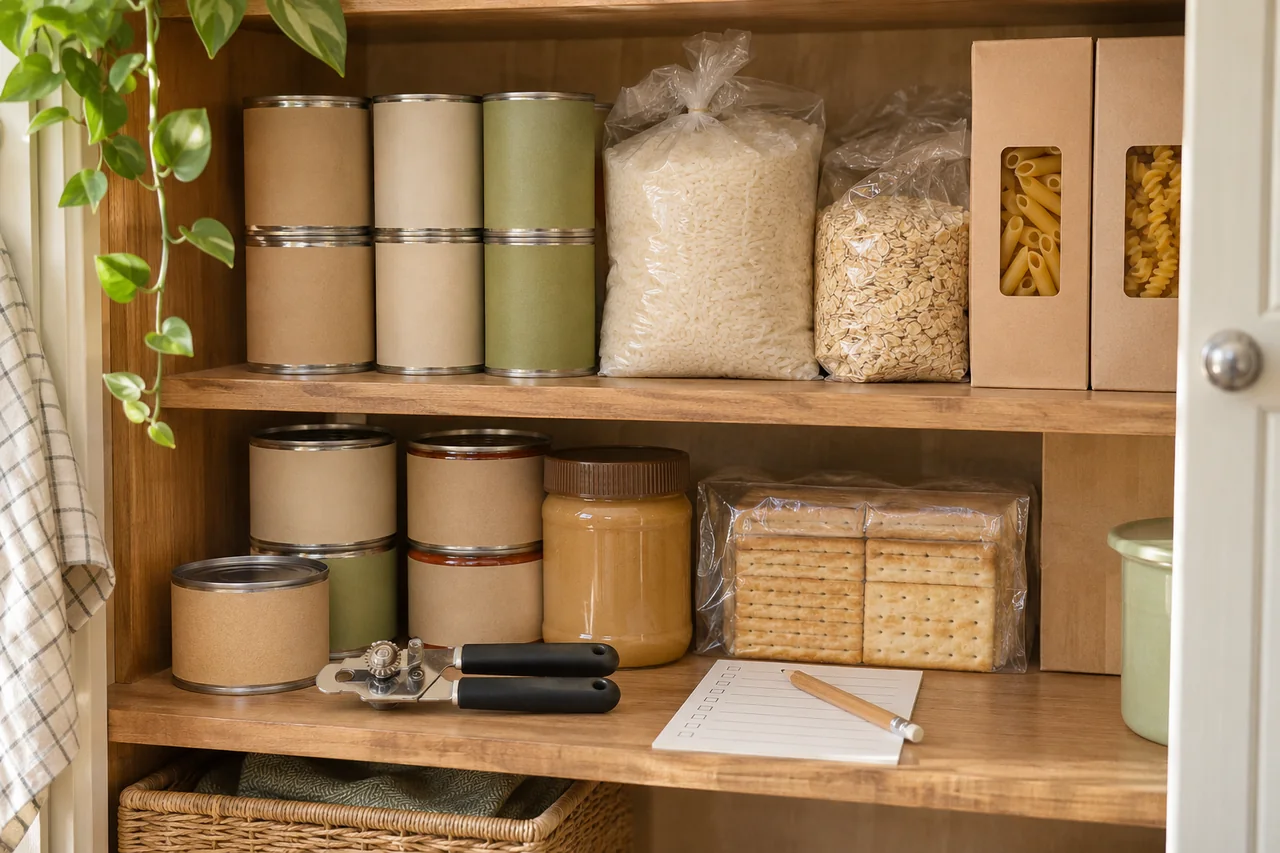
Plan meals before counting cans
Write out three days of breakfasts, lunches, dinners and snacks your household would eat during a disruption. Start with options that need little preparation. Include dietary restrictions, infant needs and pet food. USDA suggests nonperishable foods such as canned fruits and vegetables, shelf-stable proteins, dried fruit and crackers, with a manual can opener. Smaller packages help avoid leftovers that would need refrigeration. [1]
Make each meal usable without the usual kitchen
Check the label and preparation instructions for every item. Include utensils, safe water and a way to open the packaging. A bag of dry beans needs water, fuel and time; a ready-to-eat meal may not.
Try a lunch from the shelf: ready-to-eat beans or a shelf-stable protein pouch, crackers, fruit and drinking water. Count how many portions the household actually eats. If the package leaves food you cannot keep cold, switch to a smaller size for the outage shelf.
Choose a storage spot before buying in bulk
USDA recommends a cool, clean, dry location for commercially canned foods. Avoid places with moisture or temperature extremes, including space above a stove or under a sink. Inspect containers for damage; do not use leaking, swollen or badly dented cans. Home-canned food is a separate storage category: USDA advises using it within one year. Keep its batch information and tested-process records together. [2]
Give every shelf a simple rotation rule
Put new purchases behind the stock you intend to use first. Keep a short list of the item, quantity, purchase or preparation date and the date printed on the package. Check labels and storage instructions rather than assigning the same shelf life to everything. Choose a regular grocery-planning day to inspect the reserve and add used items to your shopping list. A system you can keep current is more useful than an ambitious spreadsheet you stop opening.
Expand after a practice meal
When the first three-day menu works for your household and your available storage, decide what longer reserve is reasonable. Add a little at a time within your budget and keep eating from it. Pair the pantry with a water plan and safe outage-cooking arrangements. Learning to preserve food can become another part of that routine once you have learned a tested method.
Sources & further reading
Information reviewed November 10, 2026. Follow the linked primary sources for complete guidance and updates.
- Foods to keep for emergenciesUSDA Food Safety and Inspection Service
- How long can you keep canned goods?USDA Food Safety and Inspection Service
Follow package storage instructions and current food-safety guidance. A pantry plan should account for the people, pets, water and preparation options in your own household.