
Food & water / Blog & insights
Plan meals for a power outage, safely
Build a no-cook menu first, then work out whether you have a safe outdoor cooking option.
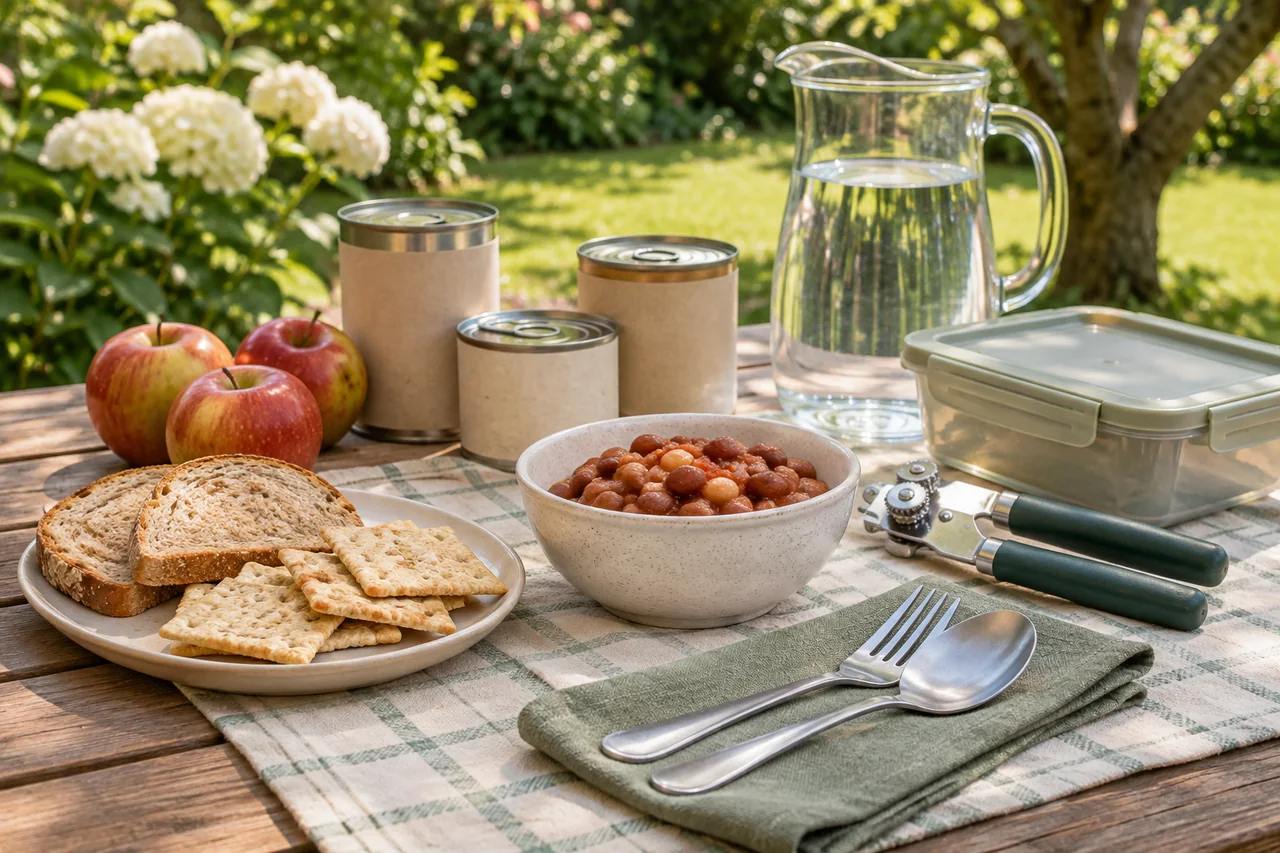
Begin with a complete no-cook day
Choose a breakfast, lunch, dinner and snacks using foods labeled ready to eat. Include the utensils, can opener and drinking water they require. Consider package sizes that your household can finish in a meal when refrigeration is unavailable. USDA recommends keeping familiar nonperishable choices and accounting for special dietary needs. Practice the menu before depending on it during an outage. [1]
Choose a safe place before choosing a stove
A grill or camping stove is not a reason to improvise an indoor kitchen. CDC warns against using charcoal grills or portable camping stoves inside a home, tent or camper. CPSC also warns that charcoal must never be used in enclosed spaces, including a garage. Follow the equipment's outdoor-use and clearance instructions. If weather or your housing situation prevents safe outdoor use, fall back to the no-cook menu. [2] [3]
Write down the whole cooking setup
For any suitable outdoor option, list the compatible equipment, manufacturer-approved fuel, pot, heat-safe tools and cleaning supplies. Read the operating and fuel-storage instructions before an emergency. Give one person responsibility for checking the setup and another a chance to learn it. Keep children and pets away from the cooking area. Your practice run should answer what happens if the outdoor space becomes unavailable.
Know what to keep and what to throw out
Keep the doors shut. An unopened refrigerator generally stays cold for up to four hours. A closed freezer holds temperature for about 48 hours when full or 24 hours when half full. If the outage is likely to run longer than four hours, move refrigerated perishables to a cooler with ice and use a thermometer to keep them at 40°F or colder.
After four hours without power or another cold source, discard refrigerated perishables such as meat, milk, eggs and leftovers. Never taste food to check whether it is safe. Frozen food that still has ice crystals or measures 40°F or colder can generally be cooked or refrozen. Use the food-by-food discard chart if you are unsure about a specific item. [4]
Make the next meal easier
After your practice meal, note which foods everyone ate, how much water you used and what was missing. Adjust portions and return the supplies to their planned location. Use those notes to build a pantry that rotates naturally. Keep the no-cook option available even if your home also has a generator, solar or a battery; the household plan should still work when one piece of equipment is unavailable.
Sources & further reading
Information reviewed November 10, 2026. Follow the linked primary sources for complete guidance and updates.
- Emergency food choicesUSDA Food Safety and Inspection Service
- Power-outage safetyCDC
- Charcoal and carbon monoxide safetyU.S. Consumer Product Safety Commission
- Keep food safe after a disaster or emergencyCDC
- What to keep and what to throw away after an outageFoodSafety.gov
Use cooking equipment and fuel only as directed by the manufacturer. Follow local restrictions and official food-safety instructions; this is a household planning guide.